


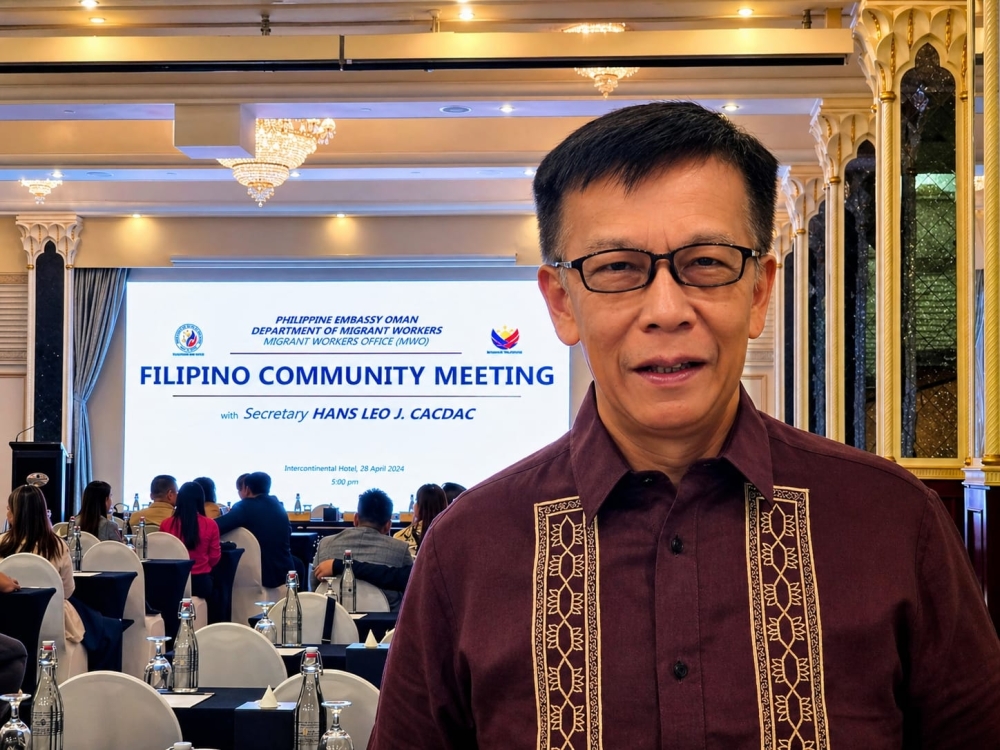





MUSCAT: Labour cooperation between the Sultanate of Oman and the Philippines is entering a more dynamic phase, underpinned by strong institutional coordination, shared policy priorities and a renewed focus on worker welfare and skills development, according to Hans Leo J Cacdac, Secretary of the Department of Migrant Workers of the Philippines.
In an exclusive interview with the Observer during his visit to Muscat, Cacdac described bilateral engagement as “very strong” and increasingly “vibrant”, citing continuous dialogue between both governments and close day-to-day coordination through diplomatic and labour channels.
"This is a relationship built on constant communication and goodwill. On a daily basis, our migrant workers office and embassy are in touch with the Omani government, particularly the Ministry of Labour”, he said. “At the leadership level, there is clear recognition of the support extended by the Omani side to Filipino workers”.
The visit forms part of sustained high-level engagement between the two countries, including recent interactions with Dr Mahad bin Said Baowain, Oman’s Minister of Labour, across regional platforms such as the Global Labour Market Conference and the World Government Summit. Both sides have also worked closely within the framework of the Abu Dhabi Dialogue, where Oman recently handed over its chairmanship to the Philippines.
Cacdac noted that these engagements are translating into concrete outcomes, particularly in strengthening labour governance frameworks and aligning bilateral priorities with broader regional initiatives. “We have been in constant touch in terms of enhancing our labour cooperative measures, both bilaterally and through multilateral platforms”, he said.
A central pillar of the partnership is Oman’s evolving policy environment on migrant worker protection. Cacdac pointed to Oman’s regulatory measures and leadership commitment to welfare as key factors reinforcing confidence among overseas Filipino workers (OFWs).
“His Majesty Sultan Haitham bin Tarik has consistently emphasised protection and welfare, not just for Filipino workers but for all migrant workers in Oman”, he said. “This is something we want to highlight and further strengthen in our discussions”.
Looking ahead, both countries are expected to deepen collaboration in areas such as welfare protection, social safeguards and skills development. As the Philippines assumes chairmanship of the Abu Dhabi Dialogue until 2028, it plans to advance an agenda that includes upskilling initiatives and stronger social protection systems — areas where Oman’s support is seen as critical.
“Upskilling is a key priority. We want to ensure that workers are not only protected but are also able to progress to higher-value roles through certification and training”, Cacdac said. “This is being discussed not only at the multilateral level but also in our bilateral engagements with Oman”.
The economic dimension of labour mobility remains significant, with remittances continuing to provide resilience for Filipino households. While Oman accounts for a smaller share compared to other Gulf markets, Cacdac underscored the broader value of overseas employment.
“Remittances remain vital, particularly during periods of global uncertainty. Beyond financial flows, there are also social remittances — skills, knowledge and experience — that returning workers bring back to the Philippines”, he explained.
He added that reintegration programmes are being strengthened under the administration of Ferdinand Marcos Jr, with a focus on recognising skills gained abroad and facilitating re-employment across sectors such as healthcare and education. On the ground, Filipino workers in Oman continue to be valued for their adaptability, communication skills and professionalism, attributes that contribute to sustained demand despite evolving labour market dynamics.
“Filipino workers are recognised for their quality of service, their ability to communicate effectively and their willingness to go beyond defined roles”, Cacdac said. “These are strengths that support long-term employability and mutual benefit”.
He also highlighted ongoing discussions on standardising employment contracts to enhance transparency and prevent disputes, alongside measures to ensure fair compensation aligned with experience and skill levels.
Concluding his visit, Cacdac reaffirmed the Philippine government’s commitment to supporting its nationals in Oman, particularly amidst global economic uncertainties.
“We are here to stand with our workers, especially during challenging times”, he said. “Our objective is to ensure that they feel the full support of government programmes and services, wherever they are”.
The trajectory of Oman–Philippines labour relations, he added, reflects a shared commitment to responsible migration governance — one that balances economic needs with human development and long-term partnership.
Oman Observer is now on the WhatsApp channel. Click here


